
SEARCH WHAT YOU WANT

High Accelerated Stress Testing (HAST): A Technical Overview
High Accelerated Stress Testing (HAST): A Technical Overview
High Accelerated Stress Testing (HAST) is an accelerated aging methodology used to evaluate the moisture resistance and reliability of electronic products, specifically focusing on their packaging and internal structures. By exposing these components to extreme temperature, humidity, and pressure conditions, HAST aims to quickly induce potential failure modes that would normally take much longer to manifest under standard operational conditions. It is not designed to simulate real-world environments but to rapidly expose latent design flaws such as chip package cracking, metal lead corrosion, or material delamination.
This article provides a detailed explanation of the HAST testing process, its importance, and the critical requirements necessary to perform effective and accurate testing.
HAST Testing Process: Step-by-Step
1. Sample Preparation and Pre-Test Inspection
Prior to testing, a representative sample batch is selected to ensure the results are indicative of mass-produced products. Each sample undergoes rigorous initial electrical and visual inspections to establish baseline performance and identify any pre-existing defects. Functional testing of integrated circuits and other critical components is performed to confirm that the sample is operational before subjecting it to accelerated stress conditions. This initial testing ensures that any failures occurring during the test are attributed to the stress conditions, not to inherent flaws in the components.
2. Placement and Configuration of Test Conditions
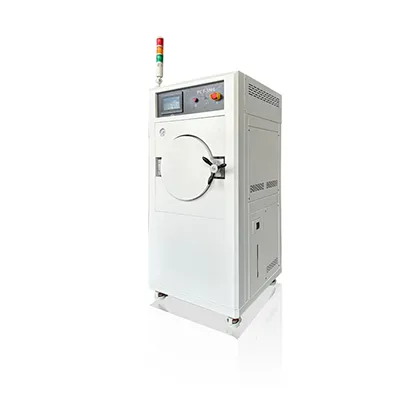
Once the sample has passed initial inspections, it is placed in the HAST test chamber. This chamber is engineered to precisely control internal temperature, humidity, and air pressure. Test parameters—such as temperature, relative humidity, and pressure—are set according to the material properties of the product, its packaging type, and the required reliability standards. Typical HAST conditions involve temperatures ranging from 110°C to 130°C or higher, relative humidity between 85% and 95%, and a corresponding saturated vapor pressure, creating an extremely aggressive environment.
3. Stress Application and Duration of Testing
Once the test chamber reaches the target conditions, the test begins. The environmental parameters are maintained under pressure to ensure a consistent high-humidity environment. The product undergoes continuous exposure to the accelerated stress for a predetermined duration, typically ranging from 48 hours to 168 hours, depending on the specific test requirements. Throughout this period, the test chamber continuously monitors and records critical environmental parameters to ensure consistency.
4. Intermediate Monitoring and Post-Test Recovery
In the case of long-duration tests, intermediate checks may be performed to assess early signs of degradation. These include removing the sample at set intervals to perform electrical performance tests, allowing for the observation of any functional decline. However, in most cases, the sample is removed after completing the full test cycle. Post-test, the sample must undergo a recovery period to stabilize at room temperature and humidity before any further testing can be performed. Once stabilized, the sample undergoes the same electrical and visual inspections as in the initial pre-test phase.
5. Data Analysis and Failure Diagnosis
After completing the stress test, the sample’s performance is compared to its pre-test baseline. If the product demonstrates functional failure, significant parameter drift, or visible defects (e.g., cracks, blistering, or corrosion), it is deemed to have failed the test. Engineers then conduct a detailed failure analysis to diagnose the root cause of the failure. This could involve inspecting the packaging material, identifying process defects, or uncovering design weaknesses. Understanding the specific failure mode is essential for improving product reliability.
Key Requirements for Effective HAST Testing
To ensure scientifically valid, comparable, and reproducible results, certain critical factors must be met when performing HAST testing.
1. Adherence to Industry Standards
HAST testing must follow established industry standards to ensure the reliability and comparability of results. Commonly referenced standards include the JEDEC JESD22-A110 series, which outlines the test conditions, methodologies, and failure criteria for moisture resistance testing. These standards provide guidance on temperature and humidity ranges, test durations, and failure thresholds, ensuring that the test results are consistent with those of other industry players and accepted by customers.
2. Precision of Testing Equipment
The performance of the HAST test chamber is paramount. It must be capable of maintaining stable and uniform temperature, humidity, and pressure conditions for the test duration. Any fluctuations in these parameters could invalidate the test results. Routine calibration and maintenance of the testing equipment are necessary to prevent inaccuracies that could skew the results. Without precise control of the environmental factors, the test conditions could become inconsistent, leading to unreliable data.
3. Proper Sample Handling and Installation
The method of sample installation in the test chamber is another critical factor in obtaining accurate results. Samples must be mounted or arranged in a manner that simulates actual operating conditions, and the installation method must follow standardized specifications. For example, the test boards used for mounting components should be designed to facilitate uniform heat and moisture distribution. Proper placement ensures that the samples experience consistent environmental stress. Incorrect installation could introduce unintended variables that affect the test's reliability.
4. Clear Failure Criteria and Detailed Analysis
Establishing clear and measurable failure criteria before testing is essential for meaningful results. This includes defining specific thresholds for electrical parameters, such as resistance or capacitance, as well as acceptable levels of physical damage (e.g., cracking, corrosion, or material delamination). Once a failure is detected, a comprehensive analysis must follow. This could involve techniques like optical microscopy, scanning electron microscopy (SEM), and other investigative tools to pinpoint the root cause of failure. Only through detailed failure analysis can improvements be made to enhance the product’s durability.
5. Safety Considerations
Given the extreme conditions involved in HAST testing—such as high temperatures, pressures, and humidity—safety is a top priority. Test chambers should be equipped with reliable safety mechanisms, such as pressure interlocks, to prevent access to the chamber when hazardous conditions exist. Operators must be thoroughly trained in proper handling procedures, including emergency protocols for power failures or equipment malfunctions. Frequent door openings should be minimized to avoid disturbing the internal conditions, and pressure should be fully released before removing or adding samples.
Conclusion
HAST testing serves as a critical tool in the reliability engineer’s toolkit, allowing for the rapid identification of potential failure modes in electronic products. By exposing components to extreme conditions in a controlled environment, it provides valuable insights into the durability of products under moisture stress. The key to effective HAST testing lies in the adherence to established standards, precise environmental control, accurate sample handling, clear failure criteria, and thorough failure analysis. Through these rigorous processes, engineers can identify design flaws and material weaknesses, thereby improving product reliability and ensuring the stability of electronic devices even in challenging environmental conditions.
High Accelerated Stress Testing (HAST): A Technical Overview
High Accelerated Stress Testing (HAST) is an accelerated aging methodology used to evaluate the moisture resistance and reliability of electronic products, specifically focusing on their packaging and internal structures. By exposing these components to extreme temperature, humidity, and pressure conditions, HAST aims to quickly induce potential failure modes that would normally take much longer to manifest under standard operational conditions. It is not designed to simulate real-world environments but to rapidly expose latent design flaws such as chip package cracking, metal lead corrosion, or material delamination.
This article provides a detailed explanation of the HAST testing process, its importance, and the critical requirements necessary to perform effective and accurate testing.
HAST Testing Process: Step-by-Step
1. Sample Preparation and Pre-Test Inspection
Prior to testing, a representative sample batch is selected to ensure the results are indicative of mass-produced products. Each sample undergoes rigorous initial electrical and visual inspections to establish baseline performance and identify any pre-existing defects. Functional testing of integrated circuits and other critical components is performed to confirm that the sample is operational before subjecting it to accelerated stress conditions. This initial testing ensures that any failures occurring during the test are attributed to the stress conditions, not to inherent flaws in the components.
2. Placement and Configuration of Test Conditions
Once the sample has passed initial inspections, it is placed in the HAST test chamber. This chamber is engineered to precisely control internal temperature, humidity, and air pressure. Test parameters—such as temperature, relative humidity, and pressure—are set according to the material properties of the product, its packaging type, and the required reliability standards. Typical HAST conditions involve temperatures ranging from 110°C to 130°C or higher, relative humidity between 85% and 95%, and a corresponding saturated vapor pressure, creating an extremely aggressive environment.
3. Stress Application and Duration of Testing
Once the test chamber reaches the target conditions, the test begins. The environmental parameters are maintained under pressure to ensure a consistent high-humidity environment. The product undergoes continuous exposure to the accelerated stress for a predetermined duration, typically ranging from 48 hours to 168 hours, depending on the specific test requirements. Throughout this period, the test chamber continuously monitors and records critical environmental parameters to ensure consistency.
4. Intermediate Monitoring and Post-Test Recovery
In the case of long-duration tests, intermediate checks may be performed to assess early signs of degradation. These include removing the sample at set intervals to perform electrical performance tests, allowing for the observation of any functional decline. However, in most cases, the sample is removed after completing the full test cycle. Post-test, the sample must undergo a recovery period to stabilize at room temperature and humidity before any further testing can be performed. Once stabilized, the sample undergoes the same electrical and visual inspections as in the initial pre-test phase.
5. Data Analysis and Failure Diagnosis
After completing the stress test, the sample’s performance is compared to its pre-test baseline. If the product demonstrates functional failure, significant parameter drift, or visible defects (e.g., cracks, blistering, or corrosion), it is deemed to have failed the test. Engineers then conduct a detailed failure analysis to diagnose the root cause of the failure. This could involve inspecting the packaging material, identifying process defects, or uncovering design weaknesses. Understanding the specific failure mode is essential for improving product reliability.
Key Requirements for Effective HAST Testing
To ensure scientifically valid, comparable, and reproducible results, certain critical factors must be met when performing HAST testing.
1. Adherence to Industry Standards
HAST testing must follow established industry standards to ensure the reliability and comparability of results. Commonly referenced standards include the JEDEC JESD22-A110 series, which outlines the test conditions, methodologies, and failure criteria for moisture resistance testing. These standards provide guidance on temperature and humidity ranges, test durations, and failure thresholds, ensuring that the test results are consistent with those of other industry players and accepted by customers.
2. Precision of Testing Equipment
The performance of the HAST test chamber is paramount. It must be capable of maintaining stable and uniform temperature, humidity, and pressure conditions for the test duration. Any fluctuations in these parameters could invalidate the test results. Routine calibration and maintenance of the testing equipment are necessary to prevent inaccuracies that could skew the results. Without precise control of the environmental factors, the test conditions could become inconsistent, leading to unreliable data.
3. Proper Sample Handling and Installation
The method of sample installation in the test chamber is another critical factor in obtaining accurate results. Samples must be mounted or arranged in a manner that simulates actual operating conditions, and the installation method must follow standardized specifications. For example, the test boards used for mounting components should be designed to facilitate uniform heat and moisture distribution. Proper placement ensures that the samples experience consistent environmental stress. Incorrect installation could introduce unintended variables that affect the test's reliability.
4. Clear Failure Criteria and Detailed Analysis
Establishing clear and measurable failure criteria before testing is essential for meaningful results. This includes defining specific thresholds for electrical parameters, such as resistance or capacitance, as well as acceptable levels of physical damage (e.g., cracking, corrosion, or material delamination). Once a failure is detected, a comprehensive analysis must follow. This could involve techniques like optical microscopy, scanning electron microscopy (SEM), and other investigative tools to pinpoint the root cause of failure. Only through detailed failure analysis can improvements be made to enhance the product’s durability.
5. Safety Considerations
Given the extreme conditions involved in HAST testing—such as high temperatures, pressures, and humidity—safety is a top priority. Test chambers should be equipped with reliable safety mechanisms, such as pressure interlocks, to prevent access to the chamber when hazardous conditions exist. Operators must be thoroughly trained in proper handling procedures, including emergency protocols for power failures or equipment malfunctions. Frequent door openings should be minimized to avoid disturbing the internal conditions, and pressure should be fully released before removing or adding samples.
Conclusion
HAST testing serves as a critical tool in the reliability engineer’s toolkit, allowing for the rapid identification of potential failure modes in electronic products. By exposing components to extreme conditions in a controlled environment, it provides valuable insights into the durability of products under moisture stress. The key to effective HAST testing lies in the adherence to established standards, precise environmental control, accurate sample handling, clear failure criteria, and thorough failure analysis. Through these rigorous processes, engineers can identify design flaws and material weaknesses, thereby improving product reliability and ensuring the stability of electronic devices even in challenging environmental conditions.
Previous:HAST Test Chamber Selection Guide