
SEARCH WHAT YOU WANT

Formaldehyde Test Chamber – Engineering Overview
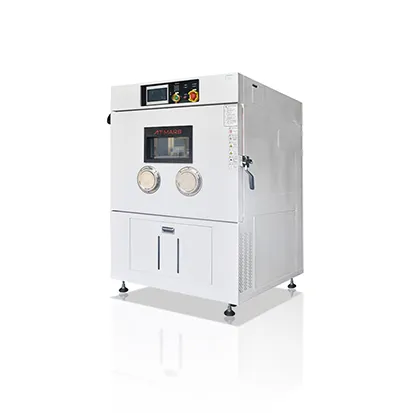
The formaldehyde test chamber integrates several advanced engineering technologies designed to meet the rigorous testing standards for environmental simulation. It employs magnetic field sealing to ensure optimal chamber integrity and minimizes leakage. The chamber’s temperature control utilizes an indirect water circulation method, which ensures stable and uniform thermal conditions across the entire chamber. Humidity control is achieved through either a two-way air ratio adjustment system or a dew point humidity control method, the latter being particularly effective in maintaining humidity fluctuations within a margin of ±3% RH. This method also prevents condensation from forming on the chamber walls, thereby enhancing the accuracy of the testing environment.
Construction and Materials
The chamber’s internal structure is fabricated from SUS304 mirror-finish stainless steel, providing superior corrosion resistance and ease of cleaning. The sealing materials are carefully selected to include food-grade silicone and PTFE (polytetrafluoroethylene), both known for their chemical resistance, long-term durability, and reliable sealing properties.
Control System and Data Management
The system’s operation is governed by a PLC (Programmable Logic Controller) integrated with an HMI (Human-Machine Interface) that features a color touchscreen for real-time monitoring and control. This interface allows operators to set parameters and track performance metrics, all of which are automatically recorded. The data logging system is capable of storing information to memory, USB flash drives, or SD cards, ensuring robust data retention and traceability. Communication with external systems is supported through multiple interfaces, including USB, RS232, and RS485, facilitating easy integration into larger test setups or data acquisition systems.
Air Purification and Pressure Regulation
The formaldehyde test chamber is equipped with a sophisticated air purification unit, designed to treat the air entering the test environment. The filtration system consists of dual-layer filters: activated carbon and potassium permanganate-impregnated activated aluminum, both of which effectively remove trace contaminants from the air, ensuring that the testing environment remains free from interfering pollutants. The chamber is maintained at a positive pressure of at least 1 Pa, a critical factor in ensuring chamber integrity and preventing external contaminants from infiltrating the test environment. Long-term pressure monitoring is facilitated by a differential pressure gauge, with an adjustable air exchange rate that can be fine-tuned to meet specific testing requirements (±0.05 AC/h).
Temperature and Humidity Control Systems
The temperature control system employs a high-precision, fully imported LCD computer control unit. This unit utilizes an indirect water-circulation method for temperature regulation, ensuring uniform temperature distribution and reducing thermal gradients within the chamber. The system is designed to operate in conjunction with the refrigeration unit, achieving dynamic equilibrium through PID-controlled adjustments to the heater output based on real-time temperature readings.
For humidity control, the chamber features a two-way adjustment method, precisely modulating the ratios of dry and wet air to achieve the desired relative humidity levels. This method ensures a high level of precision in humidity regulation, which is essential for replicating a wide range of environmental conditions.
Refrigeration System
The refrigeration system is equipped with a forced ventilation (BTC – Balance Temperature Control) method, which dynamically adjusts the chamber’s internal temperature. The control system continuously monitors the chamber temperature, and through PID algorithms, automatically regulates the heater output while maintaining the refrigeration system’s operation. This results in efficient energy use and accurate temperature management.
Protection and Safety Systems
The formaldehyde test chamber is engineered with a comprehensive protection system designed to safeguard both the equipment and operators. Key protection features include:
- Over-temperature protection: Prevents the chamber from exceeding safe temperature limits.
- Phase loss/reverse-phase protection: Ensures correct phase sequence for reliable operation of electrical components.
- Overload protection: Safeguards against electrical component overloads.
- Leakage and short-circuit protection: Protects the system from electrical hazards.
- High and low voltage protection: Ensures stable operation under varying electrical conditions.
- Water shortage protection: Prevents damage to the system due to insufficient water for cooling or humidification.
- Motor overcurrent protection: Protects the refrigeration unit’s motor from excessive current.
These safety features, combined with system monitoring and real-time alerts, ensure the chamber operates within defined parameters, reducing downtime and preventing potential failures during critical testing procedures.
Conclusion
The formaldehyde test chamber offers a robust, high-performance solution for environmental testing of materials and components. Its precision temperature and humidity control, advanced filtration system, and comprehensive protection features make it a reliable tool for engineers and researchers in a wide range of fields, including electronics, automotive, and materials testing. With its flexible control interfaces and data management capabilities, this chamber is well-suited for integration into complex testing systems that require accuracy, repeatability, and long-term stability.
The formaldehyde test chamber integrates several advanced engineering technologies designed to meet the rigorous testing standards for environmental simulation. It employs magnetic field sealing to ensure optimal chamber integrity and minimizes leakage. The chamber’s temperature control utilizes an indirect water circulation method, which ensures stable and uniform thermal conditions across the entire chamber. Humidity control is achieved through either a two-way air ratio adjustment system or a dew point humidity control method, the latter being particularly effective in maintaining humidity fluctuations within a margin of ±3% RH. This method also prevents condensation from forming on the chamber walls, thereby enhancing the accuracy of the testing environment.
Construction and Materials
The chamber’s internal structure is fabricated from SUS304 mirror-finish stainless steel, providing superior corrosion resistance and ease of cleaning. The sealing materials are carefully selected to include food-grade silicone and PTFE (polytetrafluoroethylene), both known for their chemical resistance, long-term durability, and reliable sealing properties.
Control System and Data Management
The system’s operation is governed by a PLC (Programmable Logic Controller) integrated with an HMI (Human-Machine Interface) that features a color touchscreen for real-time monitoring and control. This interface allows operators to set parameters and track performance metrics, all of which are automatically recorded. The data logging system is capable of storing information to memory, USB flash drives, or SD cards, ensuring robust data retention and traceability. Communication with external systems is supported through multiple interfaces, including USB, RS232, and RS485, facilitating easy integration into larger test setups or data acquisition systems.
Air Purification and Pressure Regulation
The formaldehyde test chamber is equipped with a sophisticated air purification unit, designed to treat the air entering the test environment. The filtration system consists of dual-layer filters: activated carbon and potassium permanganate-impregnated activated aluminum, both of which effectively remove trace contaminants from the air, ensuring that the testing environment remains free from interfering pollutants. The chamber is maintained at a positive pressure of at least 1 Pa, a critical factor in ensuring chamber integrity and preventing external contaminants from infiltrating the test environment. Long-term pressure monitoring is facilitated by a differential pressure gauge, with an adjustable air exchange rate that can be fine-tuned to meet specific testing requirements (±0.05 AC/h).
Temperature and Humidity Control Systems
The temperature control system employs a high-precision, fully imported LCD computer control unit. This unit utilizes an indirect water-circulation method for temperature regulation, ensuring uniform temperature distribution and reducing thermal gradients within the chamber. The system is designed to operate in conjunction with the refrigeration unit, achieving dynamic equilibrium through PID-controlled adjustments to the heater output based on real-time temperature readings.
For humidity control, the chamber features a two-way adjustment method, precisely modulating the ratios of dry and wet air to achieve the desired relative humidity levels. This method ensures a high level of precision in humidity regulation, which is essential for replicating a wide range of environmental conditions.
Refrigeration System
The refrigeration system is equipped with a forced ventilation (BTC – Balance Temperature Control) method, which dynamically adjusts the chamber’s internal temperature. The control system continuously monitors the chamber temperature, and through PID algorithms, automatically regulates the heater output while maintaining the refrigeration system’s operation. This results in efficient energy use and accurate temperature management.
Protection and Safety Systems
The formaldehyde test chamber is engineered with a comprehensive protection system designed to safeguard both the equipment and operators. Key protection features include:
- Over-temperature protection: Prevents the chamber from exceeding safe temperature limits.
- Phase loss/reverse-phase protection: Ensures correct phase sequence for reliable operation of electrical components.
- Overload protection: Safeguards against electrical component overloads.
- Leakage and short-circuit protection: Protects the system from electrical hazards.
- High and low voltage protection: Ensures stable operation under varying electrical conditions.
- Water shortage protection: Prevents damage to the system due to insufficient water for cooling or humidification.
- Motor overcurrent protection: Protects the refrigeration unit’s motor from excessive current.
These safety features, combined with system monitoring and real-time alerts, ensure the chamber operates within defined parameters, reducing downtime and preventing potential failures during critical testing procedures.
Conclusion
The formaldehyde test chamber offers a robust, high-performance solution for environmental testing of materials and components. Its precision temperature and humidity control, advanced filtration system, and comprehensive protection features make it a reliable tool for engineers and researchers in a wide range of fields, including electronics, automotive, and materials testing. With its flexible control interfaces and data management capabilities, this chamber is well-suited for integration into complex testing systems that require accuracy, repeatability, and long-term stability.
Previous:2-zone thermal shock test chamber
Next:AGREE test chamber