
SEARCH WHAT YOU WANT

2-zone thermal shock test chamber
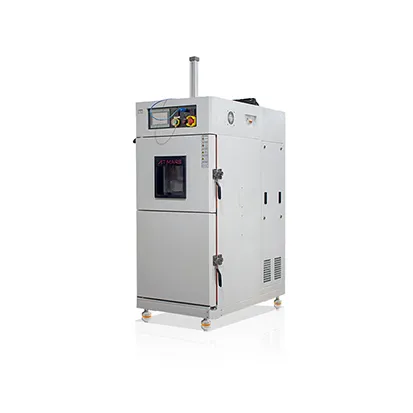
The 2-zone thermal shock test chamber is a testing chamber used in aerospace, automotive, home appliance, and scientific research fields. It assesses and determines the parameters, performance, and adaptability of electrical, electronic, automotive electrical, and material products after undergoing high and low temperature shock tests. This equipment is primarily used to simulate temperature shock environments and test the reliability of products under rapid temperature changes. Applicable products include electronic components, automotive parts, aerospace materials, metals, plastics, rubber, and many other industrial products. It is suitable for schools, factories, military units, research institutions, and other organizations.
A 2-zone thermal shock test chamber is a reliability testing chamber used to simulate the rapid transition between extreme high and low temperatures of a product. Its core function is to test the tolerance of material structures or composite materials to continuous exposure to extremely high and low temperatures in a short period of time through rapid and drastic temperature changes, thus testing the chemical changes or physical damage caused by thermal expansion and contraction. This equipment is mainly used to evaluate the performance stability and reliability of electronic and electrical components, automotive parts, metals, plastics, rubber, and other products under temperature shock.
Depending on the sample movement method, 2-zone thermal shock test chambers are mainly divided into two structures: basket type (two-pack) and damper-switching type (three-pack). The basket type (two-zone) equipment is divided into a high-temperature zone and a low-temperature zone. The test product is placed in a basket (suspended basket). During the impact, the basket is driven by a motor to rapidly transfer the test product between the high-temperature zone and the low-temperature zone, achieving temperature shock. The test product is dynamic. The damper-switching (3-zone) equipment consists of a high-temperature heat storage chamber, a low-temperature cold storage chamber, and an intermediate testing chamber. The test sample remains stationary in the testing chamber. High-temperature or low-temperature airflow is introduced into the testing chamber via a pneumatic damper, achieving temperature shock. The sample remains static.
The core operation of the equipment lies in achieving rapid temperature switching and stabilization. Key performance indicators include shock transition time and temperature recovery time. Shock transition time refers to the time it takes for the sample to move from the high-temperature zone to the low-temperature zone (or vice versa) or for the damper to complete the switching. This time is typically within 3-10 seconds, with high-performance ATMARS models achieving less than 5 seconds. Temperature recovery time refers to the time required for the sample temperature to reach the set shock temperature value, typically required to be ≤5 minutes. These two indicators together determine the effectiveness and severity level of the temperature shock test.
The 2-zone thermal shock test chamber is a testing chamber used in aerospace, automotive, home appliance, and scientific research fields. It assesses and determines the parameters, performance, and adaptability of electrical, electronic, automotive electrical, and material products after undergoing high and low temperature shock tests. This equipment is primarily used to simulate temperature shock environments and test the reliability of products under rapid temperature changes. Applicable products include electronic components, automotive parts, aerospace materials, metals, plastics, rubber, and many other industrial products. It is suitable for schools, factories, military units, research institutions, and other organizations.
A 2-zone thermal shock test chamber is a reliability testing chamber used to simulate the rapid transition between extreme high and low temperatures of a product. Its core function is to test the tolerance of material structures or composite materials to continuous exposure to extremely high and low temperatures in a short period of time through rapid and drastic temperature changes, thus testing the chemical changes or physical damage caused by thermal expansion and contraction. This equipment is mainly used to evaluate the performance stability and reliability of electronic and electrical components, automotive parts, metals, plastics, rubber, and other products under temperature shock.
Depending on the sample movement method, 2-zone thermal shock test chambers are mainly divided into two structures: basket type (two-pack) and damper-switching type (three-pack). The basket type (two-zone) equipment is divided into a high-temperature zone and a low-temperature zone. The test product is placed in a basket (suspended basket). During the impact, the basket is driven by a motor to rapidly transfer the test product between the high-temperature zone and the low-temperature zone, achieving temperature shock. The test product is dynamic. The damper-switching (3-zone) equipment consists of a high-temperature heat storage chamber, a low-temperature cold storage chamber, and an intermediate testing chamber. The test sample remains stationary in the testing chamber. High-temperature or low-temperature airflow is introduced into the testing chamber via a pneumatic damper, achieving temperature shock. The sample remains static.
The core operation of the equipment lies in achieving rapid temperature switching and stabilization. Key performance indicators include shock transition time and temperature recovery time. Shock transition time refers to the time it takes for the sample to move from the high-temperature zone to the low-temperature zone (or vice versa) or for the damper to complete the switching. This time is typically within 3-10 seconds, with high-performance ATMARS models achieving less than 5 seconds. Temperature recovery time refers to the time required for the sample temperature to reach the set shock temperature value, typically required to be ≤5 minutes. These two indicators together determine the effectiveness and severity level of the temperature shock test.
Previous:Thermal Vacuum Test Chamber