
SEARCH WHAT YOU WANT

Water Vapor Recovery and Cooling Circulation System in Constant Temperature and Humidity Test Chambers
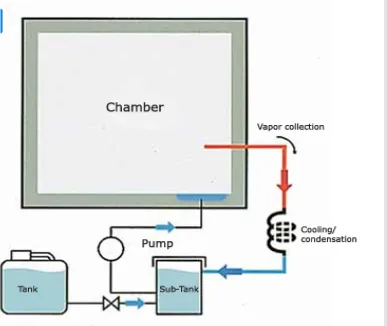
In the design of a constant temperature and humidity test chamber, an essential component is the vapor recovery and cooling circulation system. This system is critical for maintaining the stability and accuracy of humidity levels inside the chamber, ensuring consistent testing conditions.
Components of the Water Vapor Recovery and Cooling Circulation System
- Chamber:
The central component of the test chamber, where environmental conditions such as temperature and humidity are precisely controlled. The chamber is used for various testing procedures, including accelerated stress tests and environmental simulations for electronic products. - Vapor Collection:
At the top of the chamber, vapor collection is facilitated by a collection unit that draws excess humidity out of the chamber. This collected vapor is then routed through the system for further processing. Vapor collection ensures that the chamber maintains a steady level of moisture content, preventing oversaturation which could lead to inaccurate test conditions. - Tank:
The tank acts as a reservoir for storing water, which is either drawn into the system or recirculated. This water is an essential part of the humidity generation process, especially when the system needs to simulate high-humidity conditions for environmental testing. - Pump:
The pump plays a vital role in circulating water and vapor throughout the system. It ensures a continuous flow, pulling water from the tank into the sub-tank for vaporization. The pump must be robust and capable of handling the variations in pressure and flow rates required during the test. - Sub-Tank:
The sub-tank serves as an intermediary stage between the main tank and the cooling section of the system. It holds water or condensed vapor that has been cooled before it is reintroduced into the system. The sub-tank helps manage water levels and ensures the system operates within optimal parameters, reducing the risk of overflow or under-saturation. - Cooling/Condensation:
Once the vapor is collected and passed through the system, it undergoes a cooling process. The cooling system ensures that the vapor is condensed back into liquid form before being recirculated. This step is vital for energy efficiency, as the condensed water is reused rather than discarded. Cooling is achieved through a condensation unit, which reduces the temperature of the vapor and ensures that it does not interfere with the overall humidity control of the chamber.
How the System Works
The water vapor recovery and cooling circulation system operates as follows:
- Vapor Collection:
Excess humidity in the chamber is collected through the vapor collection unit. This ensures that the humidity levels inside the chamber do not exceed the set thresholds, maintaining a stable test environment. - Water Circulation:
The collected vapor is pumped into the sub-tank, where it is cooled. This allows for the condensation of the vapor into liquid water, which is then returned to the tank for reuse. - Cooling Process:
In the cooling section, the vapor undergoes a temperature drop, facilitating condensation. The cooled vapor is collected and stored in the sub-tank, ready to be recirculated into the system. - Continuous Monitoring and Adjustments:
Sensors and control systems are used to monitor the humidity and temperature within the chamber. If the conditions deviate from the preset values, the system automatically adjusts water circulation, vapor collection, and cooling processes to restore the chamber’s conditions to the desired levels.
Advantages of the System
- Energy Efficiency:
By recovering and reusing water vapor, the system reduces the need for constant replenishment of water, minimizing water consumption and lowering operational costs. - Stable Environmental Conditions:
The continuous circulation and condensation ensure that the humidity levels within the test chamber remain consistent throughout the testing process, which is crucial for the reliability of test results. - Long-Term Durability:
The design of the system ensures that it can handle long-term operations without excessive wear and tear. Regular circulation and cooling of water help prevent the buildup of mineral deposits, which could clog the system over time.
Conclusion
The water vapor recovery and cooling circulation system in a constant temperature and humidity test chamber is a sophisticated and essential component that ensures precise environmental control. By efficiently managing water vapor collection, cooling, and recirculation, this system contributes to the accuracy and reliability of environmental testing, particularly in industries requiring high-precision measurements. Proper maintenance and monitoring of this system are crucial for ensuring the longevity and efficiency of the test chamber.
In the design of a constant temperature and humidity test chamber, an essential component is the vapor recovery and cooling circulation system. This system is critical for maintaining the stability and accuracy of humidity levels inside the chamber, ensuring consistent testing conditions.
Components of the Water Vapor Recovery and Cooling Circulation System
- Chamber:
The central component of the test chamber, where environmental conditions such as temperature and humidity are precisely controlled. The chamber is used for various testing procedures, including accelerated stress tests and environmental simulations for electronic products. - Vapor Collection:
At the top of the chamber, vapor collection is facilitated by a collection unit that draws excess humidity out of the chamber. This collected vapor is then routed through the system for further processing. Vapor collection ensures that the chamber maintains a steady level of moisture content, preventing oversaturation which could lead to inaccurate test conditions. - Tank:
The tank acts as a reservoir for storing water, which is either drawn into the system or recirculated. This water is an essential part of the humidity generation process, especially when the system needs to simulate high-humidity conditions for environmental testing. - Pump:
The pump plays a vital role in circulating water and vapor throughout the system. It ensures a continuous flow, pulling water from the tank into the sub-tank for vaporization. The pump must be robust and capable of handling the variations in pressure and flow rates required during the test. - Sub-Tank:
The sub-tank serves as an intermediary stage between the main tank and the cooling section of the system. It holds water or condensed vapor that has been cooled before it is reintroduced into the system. The sub-tank helps manage water levels and ensures the system operates within optimal parameters, reducing the risk of overflow or under-saturation. - Cooling/Condensation:
Once the vapor is collected and passed through the system, it undergoes a cooling process. The cooling system ensures that the vapor is condensed back into liquid form before being recirculated. This step is vital for energy efficiency, as the condensed water is reused rather than discarded. Cooling is achieved through a condensation unit, which reduces the temperature of the vapor and ensures that it does not interfere with the overall humidity control of the chamber.
How the System Works
The water vapor recovery and cooling circulation system operates as follows:
- Vapor Collection:
Excess humidity in the chamber is collected through the vapor collection unit. This ensures that the humidity levels inside the chamber do not exceed the set thresholds, maintaining a stable test environment. - Water Circulation:
The collected vapor is pumped into the sub-tank, where it is cooled. This allows for the condensation of the vapor into liquid water, which is then returned to the tank for reuse. - Cooling Process:
In the cooling section, the vapor undergoes a temperature drop, facilitating condensation. The cooled vapor is collected and stored in the sub-tank, ready to be recirculated into the system. - Continuous Monitoring and Adjustments:
Sensors and control systems are used to monitor the humidity and temperature within the chamber. If the conditions deviate from the preset values, the system automatically adjusts water circulation, vapor collection, and cooling processes to restore the chamber’s conditions to the desired levels.
Advantages of the System
- Energy Efficiency:
By recovering and reusing water vapor, the system reduces the need for constant replenishment of water, minimizing water consumption and lowering operational costs. - Stable Environmental Conditions:
The continuous circulation and condensation ensure that the humidity levels within the test chamber remain consistent throughout the testing process, which is crucial for the reliability of test results. - Long-Term Durability:
The design of the system ensures that it can handle long-term operations without excessive wear and tear. Regular circulation and cooling of water help prevent the buildup of mineral deposits, which could clog the system over time.
Conclusion
The water vapor recovery and cooling circulation system in a constant temperature and humidity test chamber is a sophisticated and essential component that ensures precise environmental control. By efficiently managing water vapor collection, cooling, and recirculation, this system contributes to the accuracy and reliability of environmental testing, particularly in industries requiring high-precision measurements. Proper maintenance and monitoring of this system are crucial for ensuring the longevity and efficiency of the test chamber.
Previous:AGREE test chamber