
SEARCH WHAT YOU WANT

How to Prevent Condensation Failures During Rapid Temperature Cycling Tests
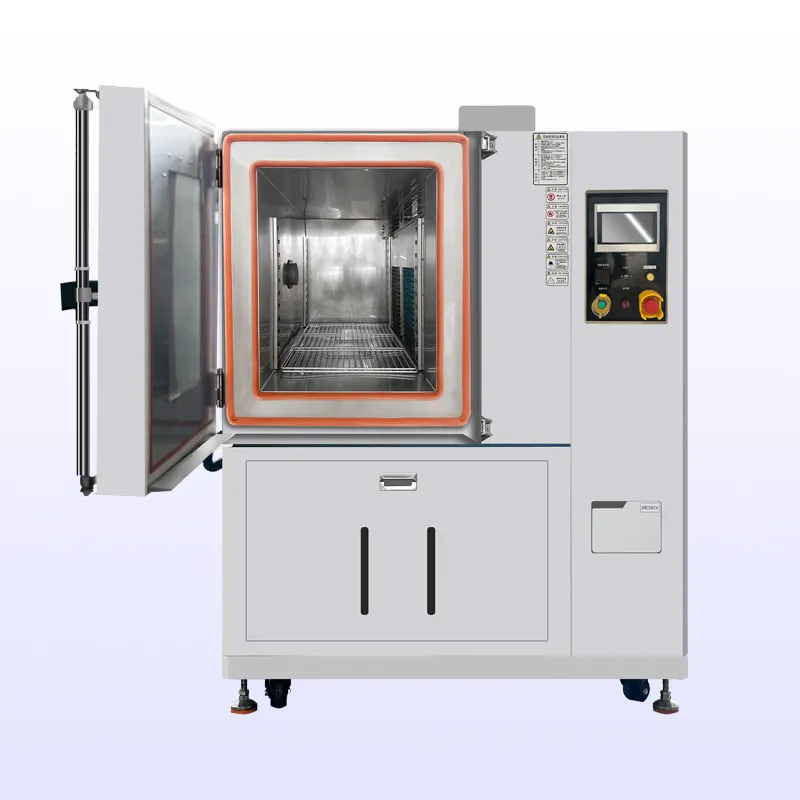
During Rapid Temperature Cycling (RTC) tests for electronics and automotive components, chambers shift drastically from low to high extremes (e.g., -40°C to high temperatures). Because of thermal inertia, the product’s surface temperature lags significantly behind the rapidly rising air temperature.
When this warm, ambient air hits the cold product surface, the temperature drops below the dew point, causing instant condensation. This moisture triggers unexpected short circuits or leakage currents, resulting in a "false failure" that disrupts R&D timelines.
To eliminate this testing artifact, laboratories rely on three highly efficient engineering solutions:
1. Dry Air / Nitrogen Purge SystemsMethod: Before and during the low-to-high temperature transition, ultra-low dew point (below -40°C) compressed dry air or Nitrogen gas is actively injected into the chamber.Impact: This drives absolute humidity down to near-zero. Because the air's dew point is suppressed far below the product's temperature, condensation becomes physically impossible.
2. Product Temperature Control (PTC) ModeMethod: Instead of controlling the chamber solely based on air sensors, a thermocouple is attached directly to the product's surface. The chamber's PLC algorithm dynamically adjusts the heating rate based on the product’s actual temperature.Impact: By minimizing the thermal delta between the air and the component, the system ensures the ambient climate never warms up fast enough to trigger boundary-layer condensation.
3. Optimized Airflow and Velocity ManagementMethod: Utilizing high-velocity variable blowers and structured baffles to maximize air circulation and eliminate dead zones, especially around complex geometries like ECU housings.Impact: High-speed airflow breaks down the thermal boundary layer on the product surface, accelerating convective heat transfer and narrowing the "vulnerability window" where condensation can form.
Conclusion
By implementing active dry air purging and product temperature control (PTC), test labs can 100% eliminate condensation artifacts. This ensures total data integrity, isolating genuine component wear-out mechanisms from environmental noise.
During Rapid Temperature Cycling (RTC) tests for electronics and automotive components, chambers shift drastically from low to high extremes (e.g., -40°C to high temperatures). Because of thermal inertia, the product’s surface temperature lags significantly behind the rapidly rising air temperature.
When this warm, ambient air hits the cold product surface, the temperature drops below the dew point, causing instant condensation. This moisture triggers unexpected short circuits or leakage currents, resulting in a "false failure" that disrupts R&D timelines.
To eliminate this testing artifact, laboratories rely on three highly efficient engineering solutions:
1. Dry Air / Nitrogen Purge SystemsMethod: Before and during the low-to-high temperature transition, ultra-low dew point (below -40°C) compressed dry air or Nitrogen gas is actively injected into the chamber.Impact: This drives absolute humidity down to near-zero. Because the air's dew point is suppressed far below the product's temperature, condensation becomes physically impossible.
2. Product Temperature Control (PTC) ModeMethod: Instead of controlling the chamber solely based on air sensors, a thermocouple is attached directly to the product's surface. The chamber's PLC algorithm dynamically adjusts the heating rate based on the product’s actual temperature.Impact: By minimizing the thermal delta between the air and the component, the system ensures the ambient climate never warms up fast enough to trigger boundary-layer condensation.
3. Optimized Airflow and Velocity ManagementMethod: Utilizing high-velocity variable blowers and structured baffles to maximize air circulation and eliminate dead zones, especially around complex geometries like ECU housings.Impact: High-speed airflow breaks down the thermal boundary layer on the product surface, accelerating convective heat transfer and narrowing the "vulnerability window" where condensation can form.
Conclusion
By implementing active dry air purging and product temperature control (PTC), test labs can 100% eliminate condensation artifacts. This ensures total data integrity, isolating genuine component wear-out mechanisms from environmental noise.
Previous:ESS Test Chamber