
SEARCH WHAT YOU WANT

Explosion-Proof Oven
Our Explosion-Proof Oven is professional drying equipment for hazardous environments with flammable/explosive materials. Complying with international explosion-proof standards (Ex d IIB T4 Gb/Ex ia IIB T4 Ga), it integrates safety, high-efficiency drying and precise temperature control, suitable for multiple industries and effectively avoiding potential safety hazards.
Our Explosion-Proof Oven is professional drying equipment for hazardous environments with flammable/explosive materials. Complying with international explosion-proof standards (Ex d IIB T4 Gb/Ex ia IIB T4 Ga), it integrates safety, high-efficiency drying and precise temperature control, suitable for multiple industries and effectively avoiding potential safety hazards.
Product Presentation
Core Advantages of Explosion-Proof Oven
1. Strict Explosion-Proof Design for Absolute Safety
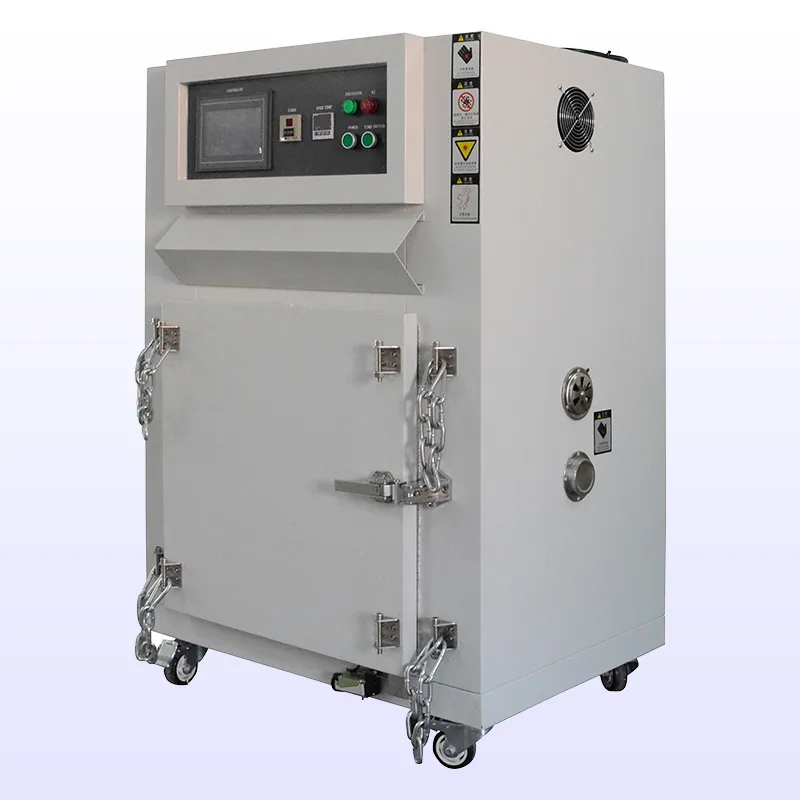
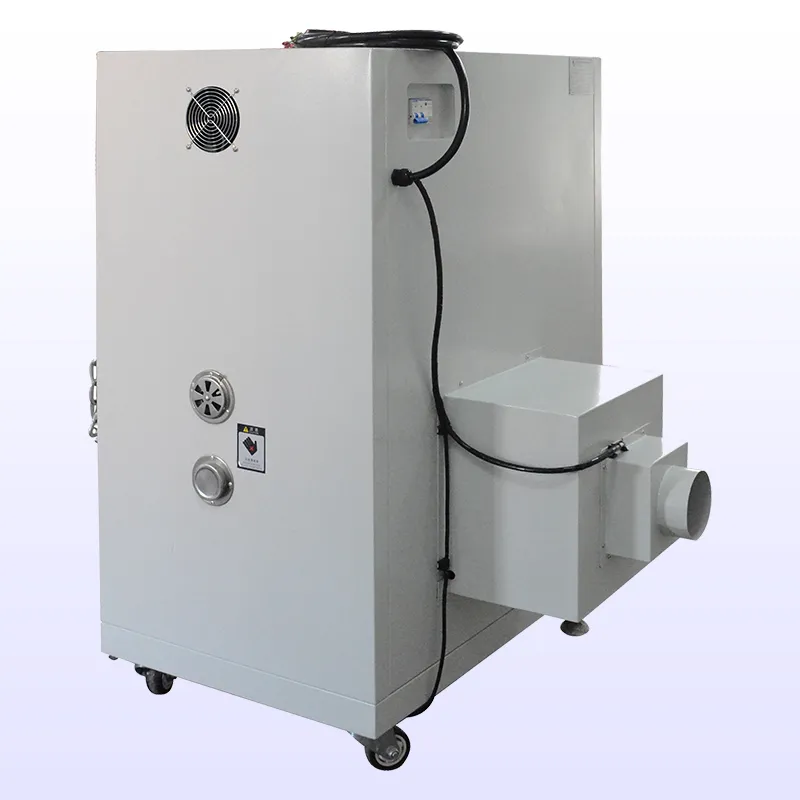
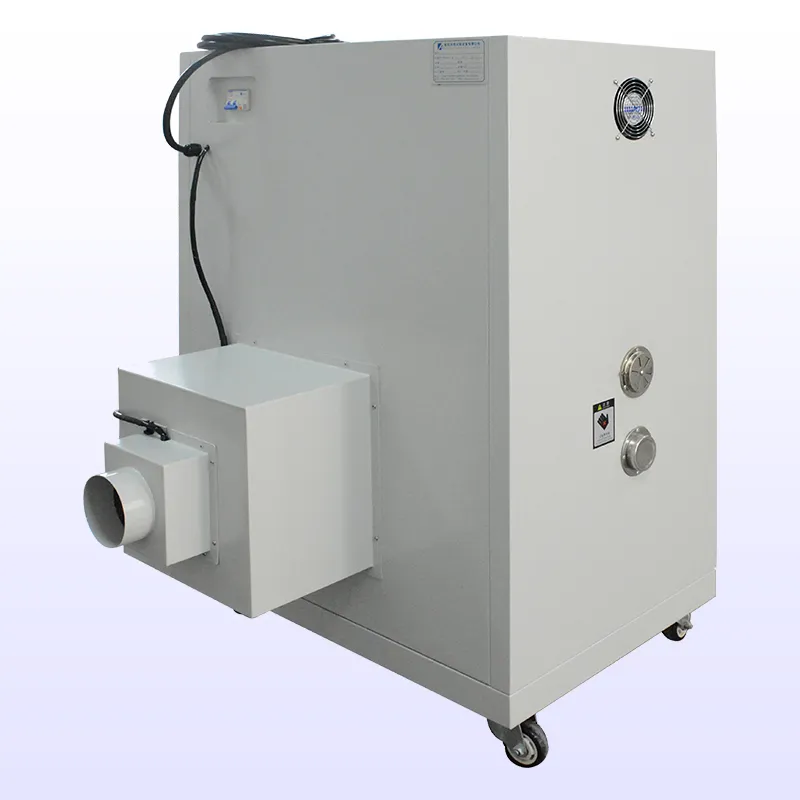
Adopting a full-set explosion-proof structure, including explosion-proof door, explosion-proof electrical components (heater, fan, controller), and built-in pressure relief device. All parts are strictly tested and certified to meet national and international explosion-proof standards, which can effectively prevent sparks, high temperature and static electricity from igniting flammable and explosive gases or dust in the chamber. The pressure relief device will automatically release pressure in case of abnormal internal pressure, avoiding equipment damage and ensuring the safety of on-site personnel and production environment.
2. High-Precision Temperature Control for Uniform Heating
Equipped with advanced microcomputer temperature control system and high-sensitivity thermocouple sensors, the oven achieves precise temperature regulation with a control range of RT+10℃ to 200℃ (customizable up to 400℃) and temperature accuracy of ±1℃. The forced convection circulation system with explosion-proof fan ensures uniform hot air distribution in the entire chamber, eliminating local temperature differences, so that all parts of the product are heated evenly, improving drying/curing quality and reducing product defects.
3. Durable Structure & Corrosion-Resistant Performance
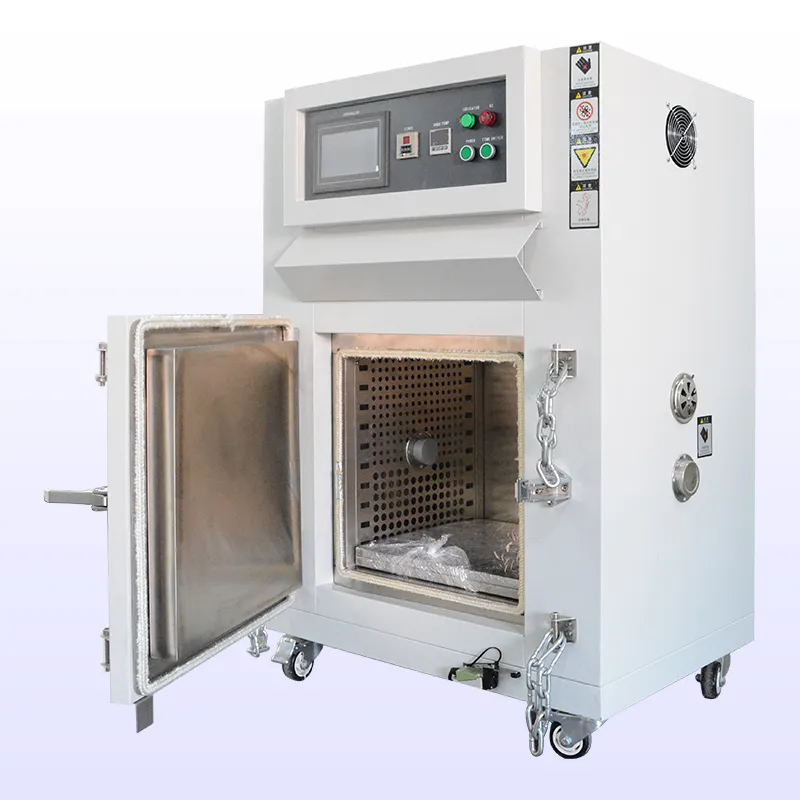
The inner cavity is made of high-quality 304/316 stainless steel with mirror polishing treatment, which is corrosion-resistant, high-temperature resistant and easy to clean, suitable for drying corrosive materials and avoiding contamination of test/products. The outer shell is made of cold-rolled steel plate with electrostatic spraying, which is wear-resistant, anti-rust and has a long service life. The integral sealing structure not only enhances heat insulation performance but also prevents the leakage of flammable and explosive gases, ensuring stable operation in harsh industrial environments.
4. Intelligent Operation & Flexible Customization
Configured with a humanized touch screen operation interface, it supports pre-setting of multiple heating programs, real-time temperature display, timing control and fault alarm. The operation is simple and intuitive, reducing the difficulty of operation for workers. Meanwhile, we provide flexible customization services according to customer needs, including chamber size, temperature range, explosion-proof level, heating power and additional functions (such as vacuum drying, nitrogen filling), perfectly matching the diverse drying requirements of different industries.
Core Advantages of Explosion-Proof Oven
1. Strict Explosion-Proof Design for Absolute Safety
Adopting a full-set explosion-proof structure, including explosion-proof door, explosion-proof electrical components (heater, fan, controller), and built-in pressure relief device. All parts are strictly tested and certified to meet national and international explosion-proof standards, which can effectively prevent sparks, high temperature and static electricity from igniting flammable and explosive gases or dust in the chamber. The pressure relief device will automatically release pressure in case of abnormal internal pressure, avoiding equipment damage and ensuring the safety of on-site personnel and production environment.
2. High-Precision Temperature Control for Uniform Heating
Equipped with advanced microcomputer temperature control system and high-sensitivity thermocouple sensors, the oven achieves precise temperature regulation with a control range of RT+10℃ to 200℃ (customizable up to 400℃) and temperature accuracy of ±1℃. The forced convection circulation system with explosion-proof fan ensures uniform hot air distribution in the entire chamber, eliminating local temperature differences, so that all parts of the product are heated evenly, improving drying/curing quality and reducing product defects.
3. Durable Structure & Corrosion-Resistant Performance
The inner cavity is made of high-quality 304/316 stainless steel with mirror polishing treatment, which is corrosion-resistant, high-temperature resistant and easy to clean, suitable for drying corrosive materials and avoiding contamination of test/products. The outer shell is made of cold-rolled steel plate with electrostatic spraying, which is wear-resistant, anti-rust and has a long service life. The integral sealing structure not only enhances heat insulation performance but also prevents the leakage of flammable and explosive gases, ensuring stable operation in harsh industrial environments.
4. Intelligent Operation & Flexible Customization
Configured with a humanized touch screen operation interface, it supports pre-setting of multiple heating programs, real-time temperature display, timing control and fault alarm. The operation is simple and intuitive, reducing the difficulty of operation for workers. Meanwhile, we provide flexible customization services according to customer needs, including chamber size, temperature range, explosion-proof level, heating power and additional functions (such as vacuum drying, nitrogen filling), perfectly matching the diverse drying requirements of different industries.
Specification
no data
Previous:No more data
Next:No more data
FEEDBACK