
SEARCH WHAT YOU WANT

The important role of forced air circulation for balanced temperature and humidity control
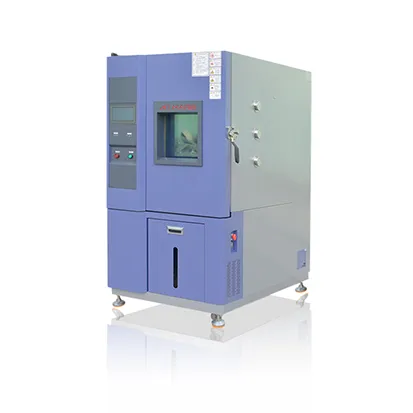
Circulating Air Duct: The temperature-regulating air duct features a dual-duct design, connected to but isolated from the working chamber. The airflow is parallel, with left-side outlet and right-side return. The partition is made of high-quality stainless steel sheet, cold-bent and formed, and the air outlet uses adjustable louvers. The temperature-regulating air duct includes an indirect heater, a circulating blower impeller, and a refrigeration evaporative heat exchanger.
Circulating Blower: A multi-blade centrifugal circulating blower is used, with a reinforced shaft and integrated aluminum alloy blades designed to withstand high and low temperatures. This achieves forced convection, effectively avoiding dead zones and maximizing temperature exchange capacity. It removes heat generated on the product surface, preventing heat buildup that could affect product performance. Forced air convection ensures consistent temperature uniformity.
Circulating Air Duct: The temperature-regulating air duct features a dual-duct design, connected to but isolated from the working chamber. The airflow is parallel, with left-side outlet and right-side return. The partition is made of high-quality stainless steel sheet, cold-bent and formed, and the air outlet uses adjustable louvers. The temperature-regulating air duct includes an indirect heater, a circulating blower impeller, and a refrigeration evaporative heat exchanger.
Circulating Blower: A multi-blade centrifugal circulating blower is used, with a reinforced shaft and integrated aluminum alloy blades designed to withstand high and low temperatures. This achieves forced convection, effectively avoiding dead zones and maximizing temperature exchange capacity. It removes heat generated on the product surface, preventing heat buildup that could affect product performance. Forced air convection ensures consistent temperature uniformity.