
SEARCH WHAT YOU WANT

Rapid temperature change test chamber
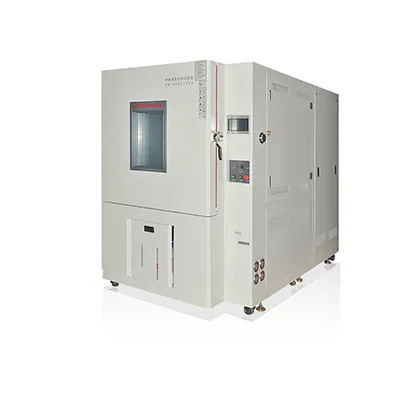
The rapid temperature change test chamber is suitable for testing the performance indicators of aerospace products, information electronic instruments, materials, electrical and electronic products, and various electronic components under conditions of rapid temperature changes.
The rapid temperature change test chamber's refrigeration system and compressor: To ensure the required cooling rate and minimum temperature, this test chamber employs a binary cascade air-cooled refrigeration system consisting of a Tecumseh fully enclosed compressor. The cascade refrigeration system includes a high-temperature refrigeration cycle and a low-temperature refrigeration cycle, connected by an evaporator-condenser. The evaporator-condenser also plays a role in energy transfer, transferring heat energy from the working chamber through the two-stage refrigeration system to achieve the desired temperature. The refrigeration system design utilizes energy regulation technology, an effective method that ensures both normal operation of the refrigeration unit and effective regulation of the refrigeration system's energy consumption and cooling capacity, reducing operating costs and failure rates to a more economical level.
The rapid temperature change test chamber is suitable for testing the performance indicators of aerospace products, information electronic instruments, materials, electrical and electronic products, and various electronic components under conditions of rapid temperature changes.
The rapid temperature change test chamber's refrigeration system and compressor: To ensure the required cooling rate and minimum temperature, this test chamber employs a binary cascade air-cooled refrigeration system consisting of a Tecumseh fully enclosed compressor. The cascade refrigeration system includes a high-temperature refrigeration cycle and a low-temperature refrigeration cycle, connected by an evaporator-condenser. The evaporator-condenser also plays a role in energy transfer, transferring heat energy from the working chamber through the two-stage refrigeration system to achieve the desired temperature. The refrigeration system design utilizes energy regulation technology, an effective method that ensures both normal operation of the refrigeration unit and effective regulation of the refrigeration system's energy consumption and cooling capacity, reducing operating costs and failure rates to a more economical level.