
SEARCH WHAT YOU WANT

Non-Linear vs. Linear Ramp Rates in Rapid Temperature Change Chambers
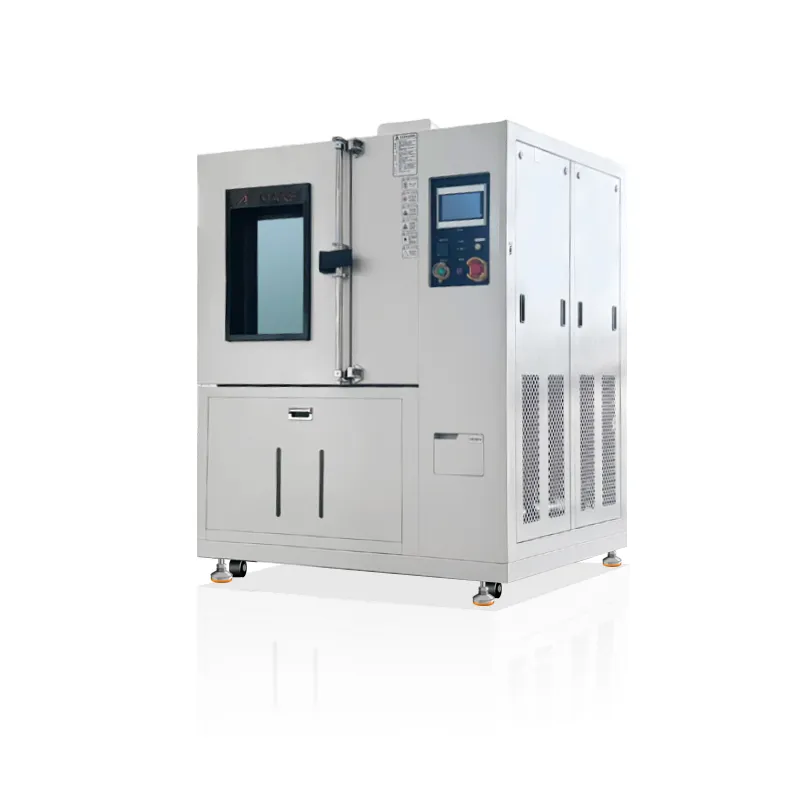
In the realm of Environmental Stress Screening (ESS) and reliability testing, the "Rapid Temperature Change" chamber is a critical tool. However, when specifying requirements for industries like aerospace, automotive electronics, or semiconductors, the term "5°C/min" or "10°C/min" can be dangerously ambiguous.
The critical distinction lies in how that speed is achieved: Non-linear (Average) versus Linear (Constant) ramp rates.
1. Defining the Dynamics
To make an informed procurement or testing decision, one must first master the definitions:
-
Non-Linear (Average) Ramp Rate: This refers to the total temperature change divided by the total time. For example, moving from -40°C to +85°C (a 125°C span) in 25 minutes results in an average rate of 5°C/min. In practice, the chamber may start at 10°C/min and slow down to 1°C/min as it approaches the set point.
-
Linear (Constant) Ramp Rate: This requires the chamber to maintain a fixed rate of change for every minute of the transition. If the set rate is 5°C/min, the controller must ensure the temperature increases by exactly 5.0°C during the first, middle, and final minute of the cycle.
2. The Engineering Challenge: Why Linear Costs More
Achieving a linear ramp rate is not merely a matter of "more power"—it is a matter of sophisticated thermal management.
-
Thermal Inertia: As the internal temperature approaches the target, the temperature delta between the heat exchanger and the air decreases. In non-linear systems, the rate naturally plateaus. In linear systems, the controller must "over-compensate" using advanced PID loops and electronic expansion valves (EEVs) to maintain the slope.
-
Load Compensation: When a test specimen (the "load") is introduced, it adds thermal mass. A linear chamber must have significant refrigeration and heating reserves to overcome this mass without deviating from the programmed slope.
3. Standards and Compliance
When should you insist on Linear?
Many rigorous international standards, such as MIL-STD-810G or certain IEC 60068 sequences, implicitly or explicitly require specific ramp rates to ensure repeatability. If your goal is to identify precise fatigue points or thermal expansion mismatches in solder joints, a Linear rate is essential. It ensures that every test run is identical, removing the "average" variable that can hide inconsistent thermal stress.
Conversely, for general Environmental Stress Screening (ESS) where the goal is simply to "shock" the product into failing early, a Non-linear chamber often provides a more cost-effective solution with higher peak stress.
4. Key Takeaways for Specification
When posting your RFQ or reviewing data sheets on GlobalSpec, always clarify the following:
-
Is the rate Linear or Non-linear?
-
Is the rate defined for "Air Temperature" or "Product Temperature"?
-
Is the performance rated "Empty" or with a specific "Kilo-load"?
Conclusion
In the world of rapid temperature change, speed is a vanity metric; consistency is the sanity metric. By understanding the physics behind linear and non-linear transitions, engineers can better align their testing hardware with the actual reliability needs of their products.
In the realm of Environmental Stress Screening (ESS) and reliability testing, the "Rapid Temperature Change" chamber is a critical tool. However, when specifying requirements for industries like aerospace, automotive electronics, or semiconductors, the term "5°C/min" or "10°C/min" can be dangerously ambiguous.
The critical distinction lies in how that speed is achieved: Non-linear (Average) versus Linear (Constant) ramp rates.
1. Defining the Dynamics
To make an informed procurement or testing decision, one must first master the definitions:
-
Non-Linear (Average) Ramp Rate: This refers to the total temperature change divided by the total time. For example, moving from -40°C to +85°C (a 125°C span) in 25 minutes results in an average rate of 5°C/min. In practice, the chamber may start at 10°C/min and slow down to 1°C/min as it approaches the set point.
-
Linear (Constant) Ramp Rate: This requires the chamber to maintain a fixed rate of change for every minute of the transition. If the set rate is 5°C/min, the controller must ensure the temperature increases by exactly 5.0°C during the first, middle, and final minute of the cycle.
2. The Engineering Challenge: Why Linear Costs More
Achieving a linear ramp rate is not merely a matter of "more power"—it is a matter of sophisticated thermal management.
-
Thermal Inertia: As the internal temperature approaches the target, the temperature delta between the heat exchanger and the air decreases. In non-linear systems, the rate naturally plateaus. In linear systems, the controller must "over-compensate" using advanced PID loops and electronic expansion valves (EEVs) to maintain the slope.
-
Load Compensation: When a test specimen (the "load") is introduced, it adds thermal mass. A linear chamber must have significant refrigeration and heating reserves to overcome this mass without deviating from the programmed slope.
3. Standards and Compliance
When should you insist on Linear?
Many rigorous international standards, such as MIL-STD-810G or certain IEC 60068 sequences, implicitly or explicitly require specific ramp rates to ensure repeatability. If your goal is to identify precise fatigue points or thermal expansion mismatches in solder joints, a Linear rate is essential. It ensures that every test run is identical, removing the "average" variable that can hide inconsistent thermal stress.
Conversely, for general Environmental Stress Screening (ESS) where the goal is simply to "shock" the product into failing early, a Non-linear chamber often provides a more cost-effective solution with higher peak stress.
4. Key Takeaways for Specification
When posting your RFQ or reviewing data sheets on GlobalSpec, always clarify the following:
-
Is the rate Linear or Non-linear?
-
Is the rate defined for "Air Temperature" or "Product Temperature"?
-
Is the performance rated "Empty" or with a specific "Kilo-load"?
Conclusion
In the world of rapid temperature change, speed is a vanity metric; consistency is the sanity metric. By understanding the physics behind linear and non-linear transitions, engineers can better align their testing hardware with the actual reliability needs of their products.
Previous:3-Zone Thermal Shock Test Chamber