
SEARCH WHAT YOU WANT

Industrial Forced Convection Oven – Technical Performance Description
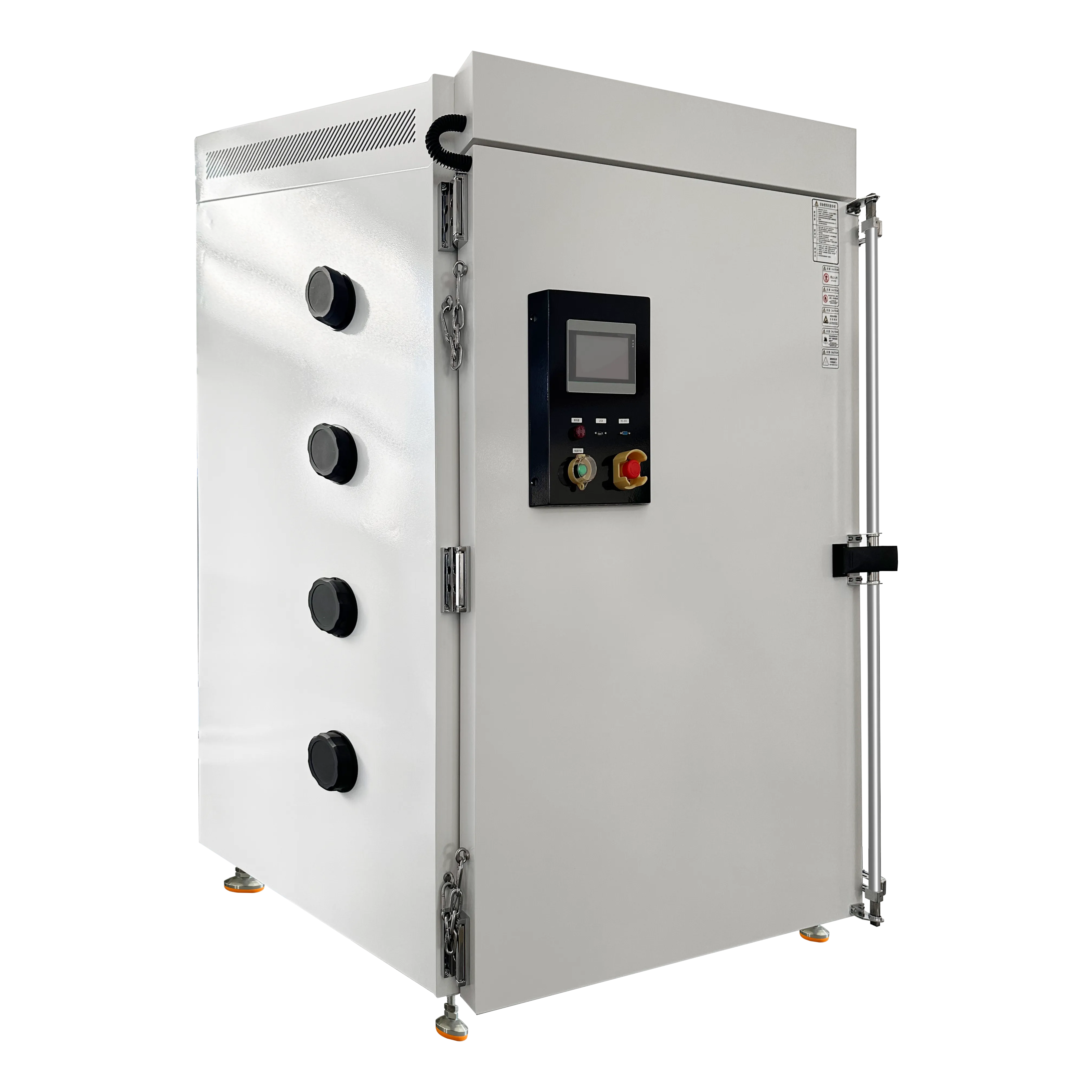
Industrial Forced Convection Oven – Technical Performance Description
1. Thermal Uniformity & Stability of Temperature Field
In industrial thermal processing equipment selection, temperature uniformity within the working chamber is a critical parameter directly affecting process repeatability, product consistency, and thermal stress distribution of materials.
Under standard operating conditions (empty chamber or uniformly loaded conditions, to be defined per validation protocol), the measured temperature uniformity of the system is:
- Temperature Uniformity: ±1.5 ~ ±3.0°C
This performance level is superior to conventional industrial oven systems, which typically achieve around ±4°C under similar conditions.
The improvement is achieved through the following thermal engineering design elements:
- Multi-point air supply and return circulation architecture
- Forced convection hot air circulation system
- Flow field homogenization design to reduce thermal gradients
- Optional zoned heating control for spatial compensation
Engineering significance:
This level of thermal uniformity supports processes requiring tight thermal history control, including:
- Battery material thermal treatment
- Semiconductor packaging and curing processes
- Aerospace composite curing and stress relief processes
2. Application Validation in High-Reliability Industries
This oven platform has been deployed in multiple high-reliability manufacturing sectors with strict process requirements, including:
- Aerospace material processing systems
- Defense-grade electronic thermal conditioning
- Semiconductor and precision manufacturing bake processes
From an engineering validation perspective, reliability is assessed through:
- Long-duration continuous operation capability (duty cycle dependent on configuration)
- Thermal drift stability over time (temperature field stability under aging conditions)
- Lifecycle design of critical components (heaters, circulation fan, temperature sensors)
Industrial reference case:
A global top 500-level enterprise in the new energy sector has deployed multiple large-scale automatic-door oven units for production-line thermal processing. Key selection criteria included:
- Temperature field consistency under batch loading
- High throughput thermal processing capability
- Compatibility with automation systems (PLC / SCADA integration readiness)
(Final acceptance criteria should always refer to validated specification sheets and FAT/SAT reports.)
3. Airflow Organization & Contamination Control System
The system adopts a fully enclosed forced convection circulation architecture designed to improve heat transfer efficiency and minimize spatial temperature gradients.
System architecture includes:
- Closed-loop air circulation duct system
- High-temperature centrifugal circulation fan
- Multi-stage high-temperature resistant filtration module (optional configuration depending on cleanliness requirement level)
Engineering functions:
3.1 Temperature Field Homogenization
Controlled air velocity distribution reduces boundary layer thermal resistance and improves convective heat transfer coefficient (h-value) inside the chamber.
3.2 Contamination Control Mechanism
The filtration and circulation design reduces risks including:
- Particulate ingress from external environment
- Secondary deposition of volatilized process materials
- Airflow disturbance-induced contamination variability
Suitable applications:
- High-cleanliness material curing processes
- Coating and surface treatment systems
- Precision electronic component thermal processing
4. Control System Architecture & Safety Protection Logic
The control system is based on a closed-loop PID temperature regulation architecture with multi-layer safety redundancy.
4.1 Core control functions:
- PID closed-loop temperature control
- Constant setpoint operation mode
- Programmable timer and cycle control
4.2 Safety protection system:
The system integrates multiple protection layers:
- Over-temperature protection system
- Independent temperature sensing channel
- Hardware-level power cutoff mechanism
- Alarm system (visual and audible alerts)
- Electrical overload and system fault protection modules
4.3 Engineering purpose of safety design:
The protection architecture is designed to mitigate risks such as:
- Thermal runaway conditions
- Component overheating and degradation
- Cascading failure during batch production processes
Conclusion – Engineering Selection Perspective
From a system engineering standpoint, the core technical value of this industrial oven platform is defined by:
- High-precision thermal uniformity control (±1.5 ~ ±3°C class performance)
- Closed-loop forced convection heat transfer architecture
- Multi-layer safety and control redundancy design
This system is suitable for industrial environments requiring strict control over:
- Thermal consistency
- Process stability
- Long-term operational reliability
Industrial Forced Convection Oven – Technical Performance Description
1. Thermal Uniformity & Stability of Temperature Field
In industrial thermal processing equipment selection, temperature uniformity within the working chamber is a critical parameter directly affecting process repeatability, product consistency, and thermal stress distribution of materials.
Under standard operating conditions (empty chamber or uniformly loaded conditions, to be defined per validation protocol), the measured temperature uniformity of the system is:
- Temperature Uniformity: ±1.5 ~ ±3.0°C
This performance level is superior to conventional industrial oven systems, which typically achieve around ±4°C under similar conditions.
The improvement is achieved through the following thermal engineering design elements:
- Multi-point air supply and return circulation architecture
- Forced convection hot air circulation system
- Flow field homogenization design to reduce thermal gradients
- Optional zoned heating control for spatial compensation
Engineering significance:
This level of thermal uniformity supports processes requiring tight thermal history control, including:
- Battery material thermal treatment
- Semiconductor packaging and curing processes
- Aerospace composite curing and stress relief processes
2. Application Validation in High-Reliability Industries
This oven platform has been deployed in multiple high-reliability manufacturing sectors with strict process requirements, including:
- Aerospace material processing systems
- Defense-grade electronic thermal conditioning
- Semiconductor and precision manufacturing bake processes
From an engineering validation perspective, reliability is assessed through:
- Long-duration continuous operation capability (duty cycle dependent on configuration)
- Thermal drift stability over time (temperature field stability under aging conditions)
- Lifecycle design of critical components (heaters, circulation fan, temperature sensors)
Industrial reference case:
A global top 500-level enterprise in the new energy sector has deployed multiple large-scale automatic-door oven units for production-line thermal processing. Key selection criteria included:
- Temperature field consistency under batch loading
- High throughput thermal processing capability
- Compatibility with automation systems (PLC / SCADA integration readiness)
(Final acceptance criteria should always refer to validated specification sheets and FAT/SAT reports.)
3. Airflow Organization & Contamination Control System
The system adopts a fully enclosed forced convection circulation architecture designed to improve heat transfer efficiency and minimize spatial temperature gradients.
System architecture includes:
- Closed-loop air circulation duct system
- High-temperature centrifugal circulation fan
- Multi-stage high-temperature resistant filtration module (optional configuration depending on cleanliness requirement level)
Engineering functions:
3.1 Temperature Field Homogenization
Controlled air velocity distribution reduces boundary layer thermal resistance and improves convective heat transfer coefficient (h-value) inside the chamber.
3.2 Contamination Control Mechanism
The filtration and circulation design reduces risks including:
- Particulate ingress from external environment
- Secondary deposition of volatilized process materials
- Airflow disturbance-induced contamination variability
Suitable applications:
- High-cleanliness material curing processes
- Coating and surface treatment systems
- Precision electronic component thermal processing
4. Control System Architecture & Safety Protection Logic
The control system is based on a closed-loop PID temperature regulation architecture with multi-layer safety redundancy.
4.1 Core control functions:
- PID closed-loop temperature control
- Constant setpoint operation mode
- Programmable timer and cycle control
4.2 Safety protection system:
The system integrates multiple protection layers:
- Over-temperature protection system
- Independent temperature sensing channel
- Hardware-level power cutoff mechanism
- Alarm system (visual and audible alerts)
- Electrical overload and system fault protection modules
4.3 Engineering purpose of safety design:
The protection architecture is designed to mitigate risks such as:
- Thermal runaway conditions
- Component overheating and degradation
- Cascading failure during batch production processes
Conclusion – Engineering Selection Perspective
From a system engineering standpoint, the core technical value of this industrial oven platform is defined by:
- High-precision thermal uniformity control (±1.5 ~ ±3°C class performance)
- Closed-loop forced convection heat transfer architecture
- Multi-layer safety and control redundancy design
This system is suitable for industrial environments requiring strict control over:
- Thermal consistency
- Process stability
- Long-term operational reliability
Previous:No more data