
SEARCH WHAT YOU WANT

Improving Thermal Uniformity in Industrial Forced Convection Ovens
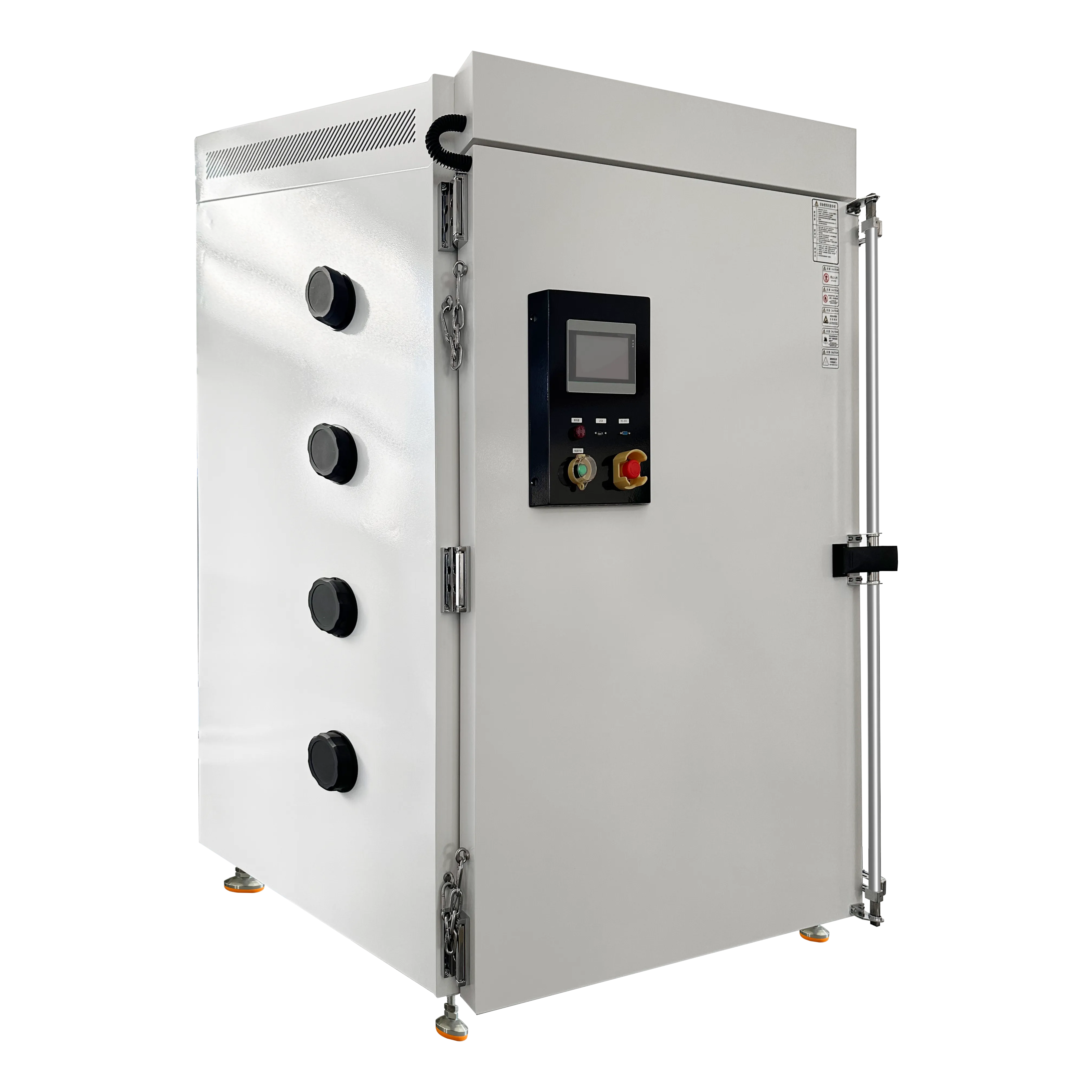
Improving Thermal Uniformity in Industrial Forced Convection Ovens
Abstract
Temperature uniformity is one of the most critical performance indicators in industrial thermal processing systems. In applications such as semiconductor packaging, aerospace composite curing, lithium battery material drying, and precision electronics manufacturing, non-uniform temperature distribution can directly lead to process instability, material stress concentration, inconsistent curing, or reduced production yield.
This article discusses the engineering factors influencing thermal uniformity in industrial forced convection ovens, including airflow organization, CFD-based duct optimization, thermal recovery characteristics, contamination control strategies, and FAT/SAT validation methodology. Practical engineering considerations for equipment selection and process optimization are also presented.
1. Why Temperature Uniformity Matters in Industrial Thermal Processes
In industrial ovens, chamber average temperature alone is insufficient to evaluate actual process capability. The spatial temperature distribution across the working volume determines whether all products receive equivalent thermal exposure during processing.
For example:
In semiconductor bake processes, localized overheating may affect bonding reliability.
In lithium battery material drying, uneven heating can result in inconsistent moisture removal.
In aerospace composite curing, temperature gradients may generate residual stress and dimensional deformation.
For this reason, industrial specifications often define:
Temperature uniformity
Temperature stability
Thermal recovery time
Airflow velocity distribution
rather than only maximum operating temperature.
2. Airflow Organization as the Core of Thermal Uniformity
In forced convection ovens, airflow organization has a greater influence on thermal uniformity than heater power alone.
Typical causes of poor uniformity include:
Dead airflow zones
Short-circuit airflow paths
Uneven return air distribution
Excessive edge heat accumulation
Insufficient circulation velocity
To reduce these effects, modern industrial oven systems typically adopt:
Multi-directional airflow circulation
Symmetrical air supply and return structures
High-static-pressure centrifugal circulation fans
Internal flow equalization channels
The objective is to minimize thermal gradients throughout the effective workspace.
3. CFD Simulation in Oven Thermal Design
Computational Fluid Dynamics (CFD) simulation is increasingly used during industrial oven development to optimize airflow distribution and thermal performance before manufacturing.
Typical CFD evaluation parameters include:
Air velocity distribution
Temperature field distribution
Turbulence intensity
Pressure loss within circulation ducts
Heat transfer coefficient distribution
Simulation results generally reveal that airflow imbalance near chamber corners and door regions is one of the primary contributors to temperature deviation.
By optimizing:
Air duct geometry
Fan placement
Return air structure
Guide plate configuration
temperature uniformity can be significantly improved.
In several large-volume oven projects, CFD-assisted optimization reduced chamber temperature deviation from approximately ±4°C to below ±2.5°C under stabilized operating conditions.
4. Thermal Recovery Characteristics Under Dynamic Loading
Steady-state uniformity alone does not fully represent actual industrial operating conditions.
In production environments, chamber doors are repeatedly opened, and thermal loads continuously change. Therefore, thermal recovery capability becomes a critical engineering parameter.
Typical evaluation indicators include:
Door-open temperature recovery time
Overshoot after reheating
Stabilization time under full load
Temperature fluctuation during cyclic operation
A properly designed forced convection system should rapidly restore thermal equilibrium after disturbance events.
Engineering optimization methods include:
Increasing circulation airflow volume
Reducing thermal inertia of duct structures
Implementing adaptive PID control algorithms
Optimizing heater zoning strategy
In high-throughput manufacturing environments, recovery performance often has a greater impact on productivity than maximum heating rate alone.
5. Temperature Distribution Testing Methodology
Temperature uniformity should always be validated through standardized thermal mapping procedures.
Typical FAT (Factory Acceptance Test) methodology includes:
Multi-point thermocouple arrangement
Stabilization at target temperature
Continuous data acquisition over defined duration
Empty-load and loaded-condition comparison
Common test standards use:
9-point
15-point
or 27-point thermal mapping layouts
depending on chamber volume.
Key recorded parameters include:
Maximum temperature deviation
Average chamber temperature
Spatial temperature gradient
Time-domain fluctuation
Such data provides more meaningful engineering value than nominal specification statements alone.
6. FAT and SAT Validation in Industrial Projects
For high-reliability industries, oven performance validation typically includes both FAT and SAT procedures.
Factory Acceptance Test (FAT)
Conducted before shipment to verify:
Heating performance
Uniformity
Safety interlocks
Alarm systems
Electrical functionality
Control logic
Site Acceptance Test (SAT)
Performed after installation to confirm:
Installation quality
Utility compatibility
Real production process performance
Environmental influence on thermal stability
SAT validation is particularly important for large-volume ovens because factory conditions may differ significantly from actual production environments.
7. Clean Airflow Design for Sensitive Manufacturing Processes
In semiconductor and precision electronics applications, airflow cleanliness is often as important as temperature control.
Modern industrial ovens increasingly incorporate:
Closed-loop circulation systems
High-temperature filtration modules
Positive pressure airflow strategies
Stainless-steel internal chambers
to minimize:
Airborne particulate contamination
Volatile deposition
External environmental interference
For sensitive curing and drying processes, contamination control directly influences product yield and long-term reliability.
8. Engineering Considerations for Oven Selection
When selecting an industrial oven, the following parameters should be evaluated together rather than independently:
Temperature uniformity
Recovery time
Airflow design
Effective working volume
Thermal load capability
Control accuracy
Cleanliness requirements
Continuous-duty reliability
In many applications, optimized airflow organization and recovery performance provide greater process benefits than simply increasing heater power.
Conclusion
Industrial oven performance is fundamentally determined by thermal engineering design rather than nominal temperature capability alone.
Airflow organization, CFD-assisted optimization, thermal recovery behavior, contamination control, and standardized validation procedures collectively determine whether a thermal processing system can meet the requirements of advanced manufacturing applications.
As process tolerances continue to tighten in industries such as semiconductors, aerospace, and new energy manufacturing, engineering-driven thermal system optimization is becoming increasingly important for both equipment manufacturers and end users.
Improving Thermal Uniformity in Industrial Forced Convection Ovens
Abstract
Temperature uniformity is one of the most critical performance indicators in industrial thermal processing systems. In applications such as semiconductor packaging, aerospace composite curing, lithium battery material drying, and precision electronics manufacturing, non-uniform temperature distribution can directly lead to process instability, material stress concentration, inconsistent curing, or reduced production yield.
This article discusses the engineering factors influencing thermal uniformity in industrial forced convection ovens, including airflow organization, CFD-based duct optimization, thermal recovery characteristics, contamination control strategies, and FAT/SAT validation methodology. Practical engineering considerations for equipment selection and process optimization are also presented.
1. Why Temperature Uniformity Matters in Industrial Thermal Processes
In industrial ovens, chamber average temperature alone is insufficient to evaluate actual process capability. The spatial temperature distribution across the working volume determines whether all products receive equivalent thermal exposure during processing.
For example:
In semiconductor bake processes, localized overheating may affect bonding reliability.
In lithium battery material drying, uneven heating can result in inconsistent moisture removal.
In aerospace composite curing, temperature gradients may generate residual stress and dimensional deformation.
For this reason, industrial specifications often define:
Temperature uniformity
Temperature stability
Thermal recovery time
Airflow velocity distribution
rather than only maximum operating temperature.
2. Airflow Organization as the Core of Thermal Uniformity
In forced convection ovens, airflow organization has a greater influence on thermal uniformity than heater power alone.
Typical causes of poor uniformity include:
Dead airflow zones
Short-circuit airflow paths
Uneven return air distribution
Excessive edge heat accumulation
Insufficient circulation velocity
To reduce these effects, modern industrial oven systems typically adopt:
Multi-directional airflow circulation
Symmetrical air supply and return structures
High-static-pressure centrifugal circulation fans
Internal flow equalization channels
The objective is to minimize thermal gradients throughout the effective workspace.
3. CFD Simulation in Oven Thermal Design
Computational Fluid Dynamics (CFD) simulation is increasingly used during industrial oven development to optimize airflow distribution and thermal performance before manufacturing.
Typical CFD evaluation parameters include:
Air velocity distribution
Temperature field distribution
Turbulence intensity
Pressure loss within circulation ducts
Heat transfer coefficient distribution
Simulation results generally reveal that airflow imbalance near chamber corners and door regions is one of the primary contributors to temperature deviation.
By optimizing:
Air duct geometry
Fan placement
Return air structure
Guide plate configuration
temperature uniformity can be significantly improved.
In several large-volume oven projects, CFD-assisted optimization reduced chamber temperature deviation from approximately ±4°C to below ±2.5°C under stabilized operating conditions.
4. Thermal Recovery Characteristics Under Dynamic Loading
Steady-state uniformity alone does not fully represent actual industrial operating conditions.
In production environments, chamber doors are repeatedly opened, and thermal loads continuously change. Therefore, thermal recovery capability becomes a critical engineering parameter.
Typical evaluation indicators include:
Door-open temperature recovery time
Overshoot after reheating
Stabilization time under full load
Temperature fluctuation during cyclic operation
A properly designed forced convection system should rapidly restore thermal equilibrium after disturbance events.
Engineering optimization methods include:
Increasing circulation airflow volume
Reducing thermal inertia of duct structures
Implementing adaptive PID control algorithms
Optimizing heater zoning strategy
In high-throughput manufacturing environments, recovery performance often has a greater impact on productivity than maximum heating rate alone.
5. Temperature Distribution Testing Methodology
Temperature uniformity should always be validated through standardized thermal mapping procedures.
Typical FAT (Factory Acceptance Test) methodology includes:
Multi-point thermocouple arrangement
Stabilization at target temperature
Continuous data acquisition over defined duration
Empty-load and loaded-condition comparison
Common test standards use:
9-point
15-point
or 27-point thermal mapping layouts
depending on chamber volume.
Key recorded parameters include:
Maximum temperature deviation
Average chamber temperature
Spatial temperature gradient
Time-domain fluctuation
Such data provides more meaningful engineering value than nominal specification statements alone.
6. FAT and SAT Validation in Industrial Projects
For high-reliability industries, oven performance validation typically includes both FAT and SAT procedures.
Factory Acceptance Test (FAT)
Conducted before shipment to verify:
Heating performance
Uniformity
Safety interlocks
Alarm systems
Electrical functionality
Control logic
Site Acceptance Test (SAT)
Performed after installation to confirm:
Installation quality
Utility compatibility
Real production process performance
Environmental influence on thermal stability
SAT validation is particularly important for large-volume ovens because factory conditions may differ significantly from actual production environments.
7. Clean Airflow Design for Sensitive Manufacturing Processes
In semiconductor and precision electronics applications, airflow cleanliness is often as important as temperature control.
Modern industrial ovens increasingly incorporate:
Closed-loop circulation systems
High-temperature filtration modules
Positive pressure airflow strategies
Stainless-steel internal chambers
to minimize:
Airborne particulate contamination
Volatile deposition
External environmental interference
For sensitive curing and drying processes, contamination control directly influences product yield and long-term reliability.
8. Engineering Considerations for Oven Selection
When selecting an industrial oven, the following parameters should be evaluated together rather than independently:
Temperature uniformity
Recovery time
Airflow design
Effective working volume
Thermal load capability
Control accuracy
Cleanliness requirements
Continuous-duty reliability
In many applications, optimized airflow organization and recovery performance provide greater process benefits than simply increasing heater power.
Conclusion
Industrial oven performance is fundamentally determined by thermal engineering design rather than nominal temperature capability alone.
Airflow organization, CFD-assisted optimization, thermal recovery behavior, contamination control, and standardized validation procedures collectively determine whether a thermal processing system can meet the requirements of advanced manufacturing applications.
As process tolerances continue to tighten in industries such as semiconductors, aerospace, and new energy manufacturing, engineering-driven thermal system optimization is becoming increasingly important for both equipment manufacturers and end users.
Previous:Altitude Test Chamber